

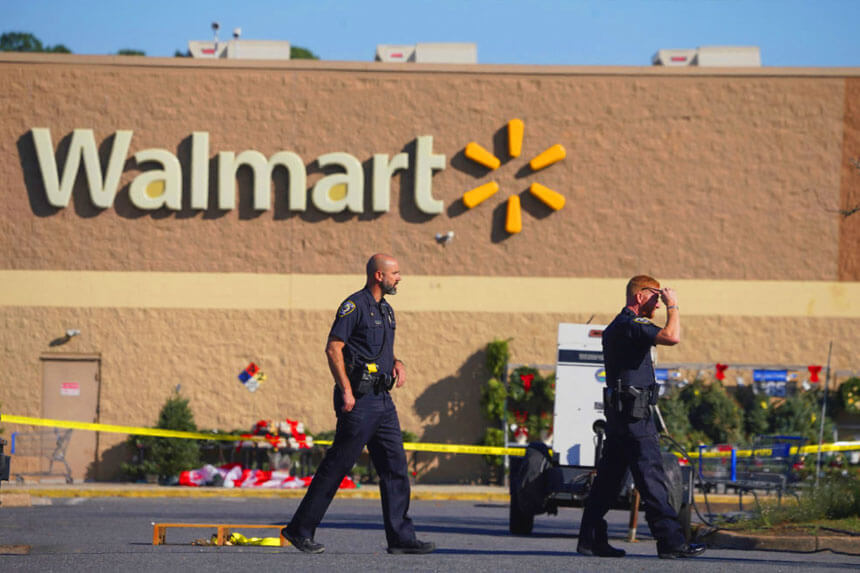
Kentucky Walmart police presence has become a visible reality across the state, from Louisville’s busy supercenters to rural stores in smaller towns like Pikeville. This trend reflects broader changes in retail security, community policing programs, and public safety measures. Shoppers now regularly encounter uniformed patrols near entrances, in parking lots, and inside stores during their routine shopping trips.
What Recent Incidents Show About Police Activity
The most notable recent incident occurred on April 29, 2025, at the Berea Walmart off Exit 76. Officers responding to a Flock camera alert for a stolen vehicle shot two suspects when driver Dustin Allen of Ashcamp reversed his car and struck an officer. The officer was treated and is recovering at home.
This follows a broader pattern of incidents across Kentucky. In 2024 alone, Louisville police responded to over 2,500 incidents at Walmart stores. These calls range from shoplifting and theft to disturbances and medical emergencies. Even law enforcement personnel aren’t immune to retail crime, as seen in February 2025 when a dispatcher was charged with attempting to steal over $1,000 in merchandise from Paintsville and Prestonsburg Walmart stores.
Rural counties face their own challenges. Counties like Harlan and Floyd have fewer than 10 officers per 10,000 people, yet a disproportionate number respond to retail-related calls, especially at Walmart. The deterrent effect of visible law enforcement visibility has become essential in these under-resourced areas.
Police Response Patterns Across Kentucky
Since 2020, law enforcement across Kentucky has increased its visibility and responsiveness at Walmart locations as part of both proactive policing and strategic partnerships with corporate loss prevention teams. Walmart stores account for up to 30% of shoplifting calls in some Kentucky counties. This creates a substantial burden on peace officer functions in communities where Walmart serves as an unofficial town center.
Why Kentucky Walmarts Need More Security Operations
Retail theft has reached what experts call “industrial scale” in some Kentucky areas. Organized retail crime rings targeting Walmart have been discovered in Lexington, Bowling Green, and smaller towns like Richmond. These coordinated theft operations often involve groups quickly removing electronics, clothing, or household goods.
Loss prevention teams face challenges from Walmart’s open layout and high foot traffic. Self-checkout systems, while convenient, create opportunities for theft. Store managers have turned to local police departments for backup, requesting regular patrols especially during weekends, holidays, and seasonal sales events.
Mental health and substance abuse incidents also drive officer deployment. Walmart stores—especially those open 24 hours or located near public transportation—often attract vulnerable individuals experiencing homelessness, addiction, or mental health crises. When asset protection teams can’t handle these situations, law enforcement steps in.
In many Kentucky towns—particularly rural or suburban communities—Walmart functions as a default town square where small conflicts or incidents can quickly escalate. This dual role requires increased security measures that go beyond traditional retail security.
How Police and Walmart Coordinate Security Checkpoints
Formal partnerships exist between Walmart and Kentucky law enforcement agencies through cost-sharing agreements. Louisville Metro Police Department runs a Retail Crime Unit that partners closely with major retailers, including Walmart, focusing on organized theft rings. These arrangements often involve Walmart reimbursing counties for dedicated officer hours.
Technology integration supports these partnerships. Walmart has evolved its loss prevention strategy to include real-time surveillance centers monitoring stores via AI-assisted cameras, asset protection teams, and automated theft deterrent systems. When incidents escalate beyond internal protocols, police intervention becomes necessary through established jurisdictional coordination.
Community policing initiatives try to balance enforcement with relationship building. Sheriff Mike Jones noted that having a presence at Walmart allows deputies “not just to deter crime, but to be accessible, answer questions, and build trust” in communities where Walmart serves as a gathering place. These constabulary duties extend traditional law enforcement into social service roles.
Partnership Models and Funding
Funding models vary, with Walmart often contracting directly with police departments or sheriff’s offices, reimbursing them for dedicated officer hours like a private security contract. Sometimes patrol units operate from general police budgets funded by taxes, while grants or specific retail crime initiatives provide additional funding.
Community Reactions Range from Relief to Surveillance Concerns
Supportive voices appreciate the visible police presence. As one Bowling Green mother shared, “After that incident last year, I feel better seeing the officer near the door when I have my kids with me.” Many shoppers report enhanced response capability during late-night trips or in parking lots makes them feel secure.
Critical perspectives worry about over-policing in everyday spaces. Civil rights organizations and shoppers from marginalized communities have voiced concerns about being unfairly targeted or watched based on appearance rather than behavior. This creates tension between safety and civil liberties, highlighting the difference between security as safety versus security as restriction.
Resource allocation debates question whether taxpayers should fund protective measures for private retailers. A 2024 audit in Fayette County revealed that nearly 16% of all police calls in certain districts were linked to Walmart stores. Critics argue this represents cost-shifting from private security to public departments.
Employee experiences vary widely. While some staff appreciate having immediate backup for difficult situations, others worry the police presence—both physical and as influence—changes workplace dynamics and could intimidate customers.
Alternative Approaches to Traditional Policing
Some Kentucky counties are exploring community-led intervention teams as alternatives—such as social workers responding to non-violent disturbances or mental health incidents. Pilot programs in Elizabethtown and Owensboro are exploring joint task forces that include social workers, crisis intervention counselors, and private security specialists alongside officers.
In contrast to Kentucky’s approach, security withdrawal or unmonitored retail environments represent the opposite end of the spectrum, where stores rely entirely on technology and private security personnel rather than sworn officers.
Practical Tips for Shoppers in High-Security Environments
Stay aware of your surroundings but don’t let police presence cause anxiety. Officers are there primarily for deterrence and emergency response, not to monitor routine shopping.
Follow store policies regarding receipts, bags, and checkout procedures. Clear compliance helps avoid misunderstandings that could escalate unnecessarily.
Report genuine concerns to store management or police if you witness theft, disturbances, or suspicious activity. Your observations help maintain a safe environment for everyone.
Respect officer duties by allowing them space to work while remaining cooperative if approached. Most interactions involve routine safety checks or assistance.
Know your rights regarding searches, detention, and questioning. Police must follow proper procedures even in retail environments.
Use common sense during shopping trips. Avoid leaving valuable items visible in vehicles, shop during well-lit hours when possible, and trust your instincts about suspicious situations.
The kentucky walmart police presence represents a complex intersection of retail security initiatives, community policing, and social support systems. As Kentucky lawmakers consider policies linking corporate taxation to law enforcement burden, and as Walmart argues it actively partners with communities to reduce strain rather than increase it, finding the right balance between protection and comfort remains an ongoing challenge. This evolving retail security model may shape how America approaches commercial space policing nationwide.
